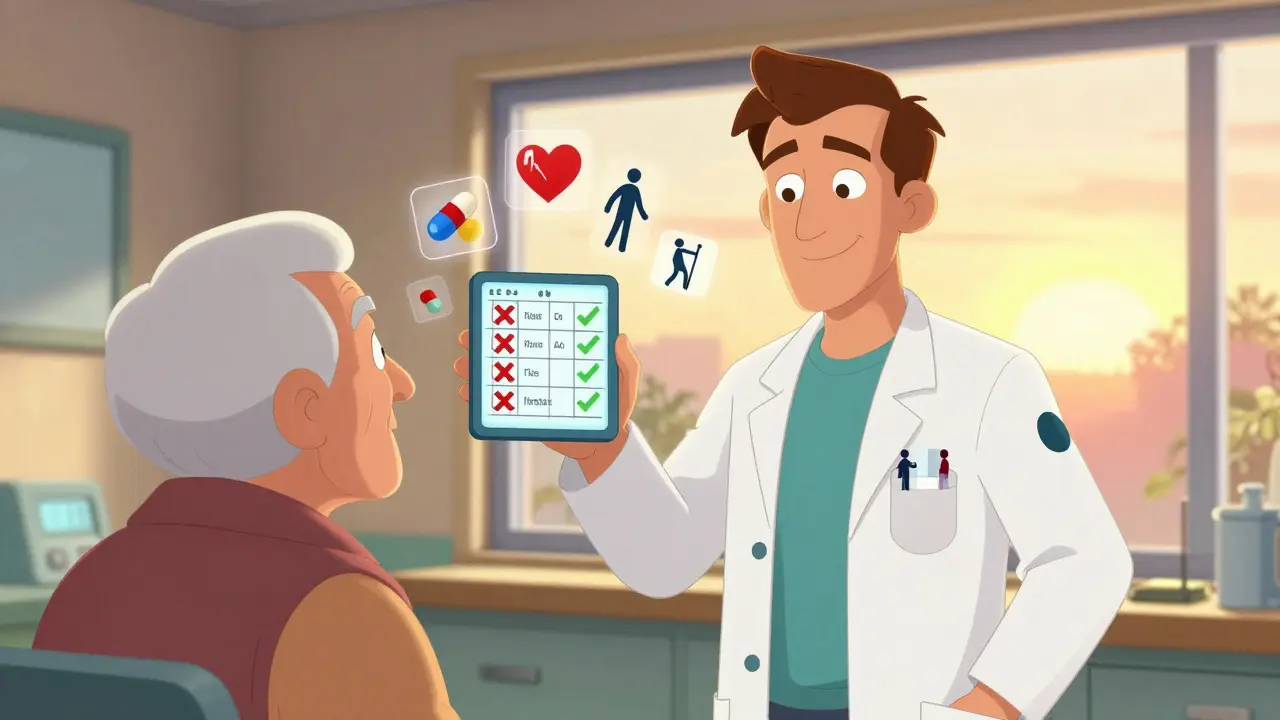
Pharmacist-led substitution programs are changing how medications are managed in hospitals and community pharmacies across the U.S. These aren’t just about swapping one pill for another. They’re structured clinical services where pharmacists actively review a patient’s entire medication list, spot dangerous gaps or overlaps, and make evidence-based changes to prevent harm. The goal is simple: fewer hospital readmissions, fewer bad reactions to drugs, and better outcomes - especially for older adults and those taking five or more medications daily.
How these programs started
The push for pharmacist-led substitution began after The Joint Commission made medication reconciliation a national safety goal in 2006. Before that, patients often arrived at hospitals with incomplete or wrong medication lists. Nurses and doctors were overloaded, and no one had time to double-check every pill. Pharmacists, with their deep training in drug interactions, dosages, and formularies, were the natural fit. By 2010-2012, hospitals started assigning dedicated pharmacists to this task. Today, 87% of U.S. academic medical centers and 63% of community hospitals have formal programs in place.What happens during a substitution
When a patient is admitted, a medication history technician gathers their full list of drugs - including over-the-counter pills, supplements, and what they’re actually taking at home. This is often very different from what’s written on paper. Studies show an average of 3.7 discrepancies per patient. A pharmacist then reviews this list against the hospital’s formulary. If a drug isn’t covered, or if a safer alternative exists, they recommend a switch. For example, replacing an old anticholinergic drug with a newer one that doesn’t cause confusion or falls. In one study, 68.4% of non-formulary medications were successfully substituted at admission.Outcomes that matter
The results speak for themselves. Across multiple studies, these programs cut adverse drug events (ADEs) by 49%. That means fewer allergic reactions, kidney damage from wrong doses, or dangerous interactions. Hospital readmissions within 30 days dropped by an average of 11%, with some high-risk groups seeing drops as high as 22%. For patients with heart failure or COPD, this can mean the difference between going home and ending up back in the ER. Cost savings? Around $1,200 to $3,500 per patient, mostly from avoiding preventable hospital stays.Who benefits most
The biggest gains come from patients with polypharmacy - those taking five or more medications. Older adults, people with poor health literacy, and those recently discharged from intensive care see the clearest improvements. The OPTIMIST trial in 2018 found that patients who got full pharmacist-led intervention had a 38% lower risk of being readmitted compared to those who only got a basic medication review. The number needed to treat was just 12 - meaning for every 12 patients helped, one hospital readmission was prevented.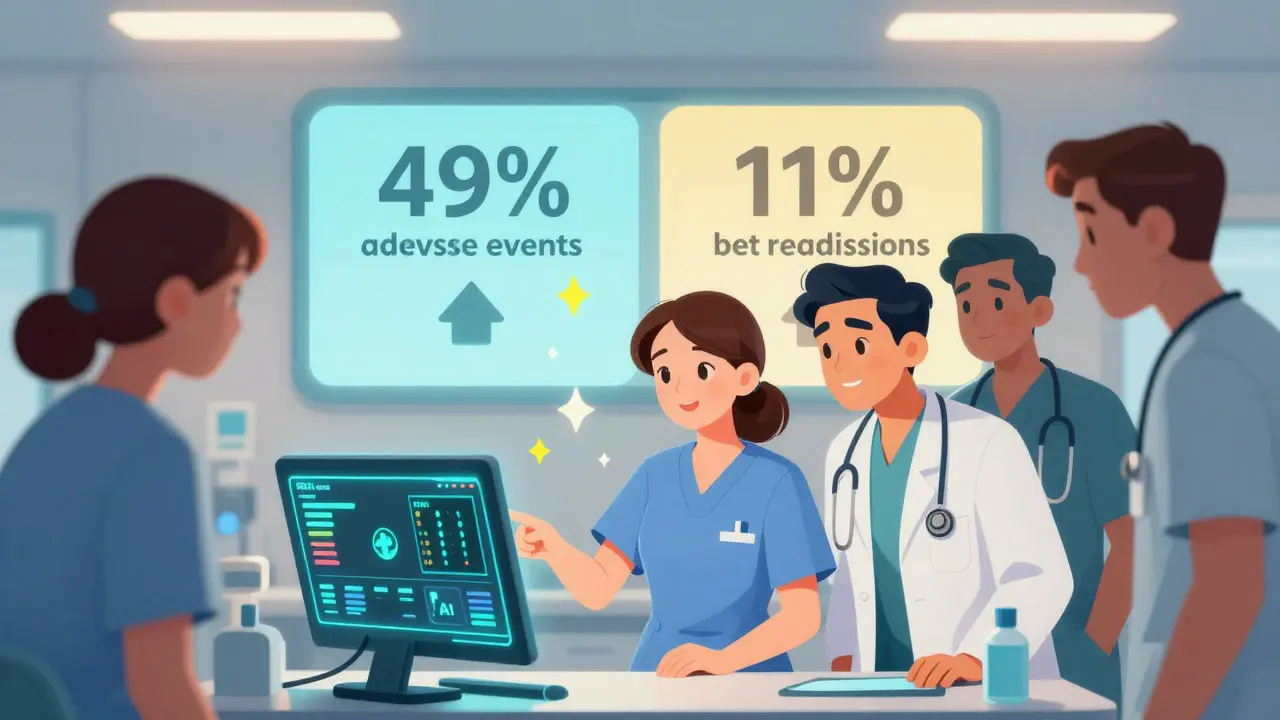
How programs are built
A typical program runs with one pharmacist for every three to four technicians. Technicians collect medication histories - interviewing patients, calling pharmacies, checking records. Pharmacists focus on the clinical decisions: which drugs to stop, which to change, which to add. Training is strict: at least two hours of classroom instruction and five eight-hour supervised shifts before working alone. After training, technicians achieve 92.3% accuracy in completing medication histories.Technology and tools
Electronic health records (EHRs) are critical. Systems now automatically flag when a patient is on a non-formulary drug, or when a medication has known risks in elderly patients. AI tools are being tested to speed up data collection - one pilot cut the time needed to gather a full medication list by 35%. In the future, these tools might predict which patients are most at risk for ADEs before they even arrive at the hospital.Deprescribing: stopping drugs that shouldn’t be taken
One of the most powerful parts of these programs is deprescribing - stopping medications that are no longer needed or are doing more harm than good. In the Beirut study, over half of all pharmacist recommendations were to stop a drug. Common targets: proton pump inhibitors (PPIs) for heartburn, antipsychotics for dementia, or long-term benzodiazepines. Stopping PPIs reduced C. difficile infections by 29%. Cutting anticholinergics cut falls in elderly patients by 41%. But here’s the catch: doctors accept only about 30% of these recommendations. That’s why successful programs use EHR alerts, standardized communication templates, and regular team huddles to build trust.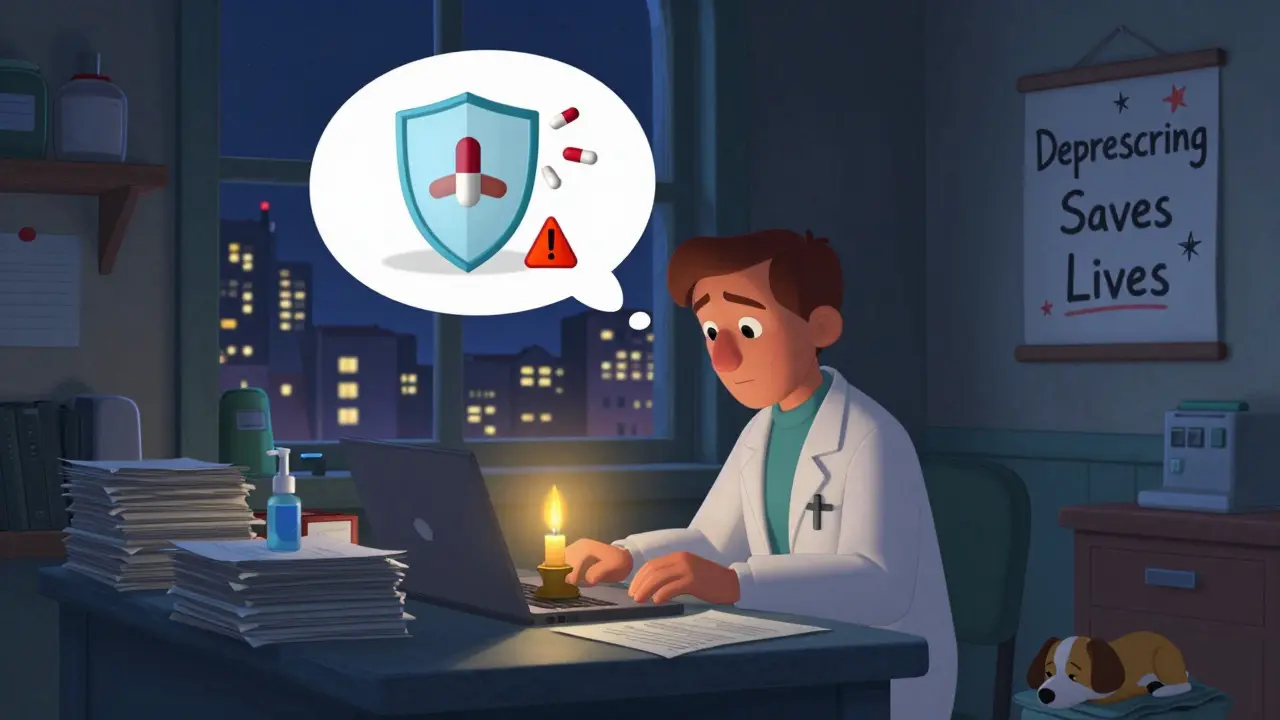
Challenges and barriers
Not everything is smooth. Physician resistance is common - 43% of academic centers report doctors refusing substitution suggestions. Time is another big issue. A full review takes about 67 minutes per patient. That’s why technicians handle data gathering, freeing pharmacists to make decisions. Documentation is heavy too - about 12.7 minutes per patient just to log changes. Reimbursement is still messy. Only 32 states fully reimburse these services through Medicaid. Medicare Part D covers them for 28.7 million people, but the paperwork is a nightmare. Rural hospitals struggle the most: only 22% have full programs, compared to 89% in big cities.What’s next
The future is bright. The 2022 Consolidated Appropriations Act now requires medication reconciliation for all Medicare Advantage patients - a $420 million market opportunity. By 2027, the market for these services is projected to hit $3.24 billion. More than 63% of Accountable Care Organizations (ACOs) now include pharmacist-led substitution in their quality metrics. New rules from CMS in 2024 could boost reimbursement rates by 18-22%. State pharmacy boards are lobbying to expand pharmacists’ authority to make substitutions without physician approval - something already allowed in 12 states.Why this isn’t just a pharmacy issue
Nurses, doctors, and administrators all agree: these programs work. Surveys show 92% of pharmacists, 87% of nurses, and 76% of physicians believe they improve patient care. But they only work if everyone buys in. Hospitals that succeed have daily huddles between pharmacists, nurses, and residents. They embed pharmacists in ICU and ER teams. They train doctors on why deprescribing matters. It’s not about replacing physicians - it’s about giving them better information so they can make better decisions.Final thoughts
Pharmacist-led substitution programs are no longer experimental. They’re proven, cost-effective, and life-saving. They reduce harm, cut costs, and keep patients out of the hospital. The evidence is clear. The tools are here. The challenge now is scaling them - especially in places with few pharmacists. If we want safer care for aging populations and complex medication users, this isn’t optional. It’s essential.Hva er en farmasøytisk substitusjonsprogram?
En farmasøytisk substitusjonsprogram er en systematisk tjeneste der farmasøytiske yrkesfolk gjennomgår en pasients hele medikamentliste, identifiserer farlige feil eller unødvendige legemidler, og foreslår tryggere alternativer. Dette inkluderer å bytte ut ikke-formulærdeler, stoppe uønskede medikamenter (deprescribing), og sikre at pasienten får riktig dosering og riktig medikament basert på deres helsestatus.
Hvor effektive er disse programmene?
Studier viser at disse programmene reduserer uønskede legemiddelhendelser med 49%, reduserer innleggelser innen 30 dager med gjennomsnittlig 11%, og sparer mellom $1.200 og $3.500 per pasient. For pasienter med polyfarmasi og eldre voksne er effekten enda større - noen studier viser en reduksjon på opp til 22% i innleggelser.
Hvordan jobber farmasøytene med å stoppe unødvendige medikamenter?
Farmasøytene bruker kliniske retningslinjer og datadrevne verktøy for å identifisere medikamenter som er farlige, unødvendige, eller har lavere effekt enn risikoen. De foreslår spesielt å stoppe anticholinergiske legemidler, protonpumpehemmere (PPI) og langvarige sedativa. I en studie fra Beirut ble 52% av anbefalingene rettet mot å stoppe medikamenter, og det har vist seg å redusere fallet og infeksjoner som C. difficile.
Hvorfor aksepterer leger ikke alltid anbefalingene?
Legeakseptansen er lav - bare omkring 30%. Det skyldes manglende kommunikasjon, manglende tillit, eller at leger ikke er kjent med de nyeste kliniske bevisene. De beste programmene løser dette ved å integrere anbefalingene direkte i pasientjournalen, bruke standardiserte meldinger, og ha daglige møter med lege- og farmasøytteam.
Er disse programmene dyre å sette opp?
Ja, de krever ressurser: en farmasøyt, teknikere, og tid til opplæring og dokumentasjon. En full gjennomgang tar omtrent 67 minutter per pasient. Men kostnadene blir dekket av reduserte innleggelser og unngåtte komplikasjoner. For hver $1 investert, sparer sykehusene mellom $4 og $8. I lang sikt er programmet kostnadsbesparende.
Hva er barrierene for å implementere dette i små eller rurale sykehus?
De største barrierene er mangel på farmasøytiske ressurser, lav finansiering, og manglende støtte fra ledelsen. Bare 22% av kritiske tilgjengelige sykehus har fullt program, mot 89% i store byer. Løsningen er å bruke teknologi - som AI for å samle medikamentdata - og å bygge samarbeid med nærliggende sykehus eller apotek for å dele ressurser.


Rune Bjørnerås
Dette er nøyaktig hva helsetjenesten trenger - ikke flere kanskjeer, men faktiske løsninger. Farmasøytene er de som faktisk ser hele bildet, ikke bare en del av det. Når jeg var i sykehuset forrige år, var det farmasøyt som oppdaget at jeg tok tre medikamenter som slått hverandre i hodet. Ingen lege hadde sett det. Det er ikke bare smart, det er livreddende.
Vi må utvide dette til alle kommuner, ikke bare store byer. Hvorfor skal en eldre i Nordland måtte vente på en løsning som allerede fungerer i Oslo?